Despite their significant historical importance, the general public is hardly aware of the Nemi ships and their history. The reason for this is obvious: they no longer exist. However, their story is fascinating.
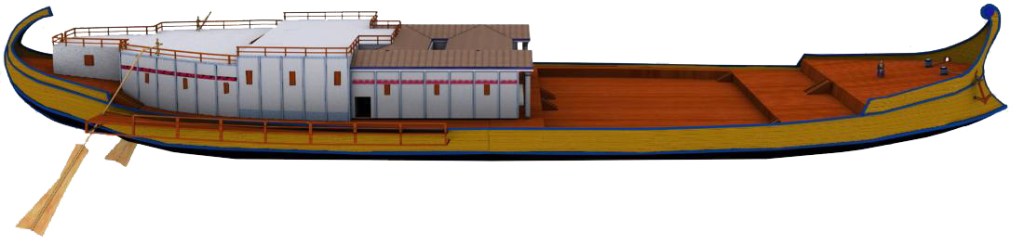
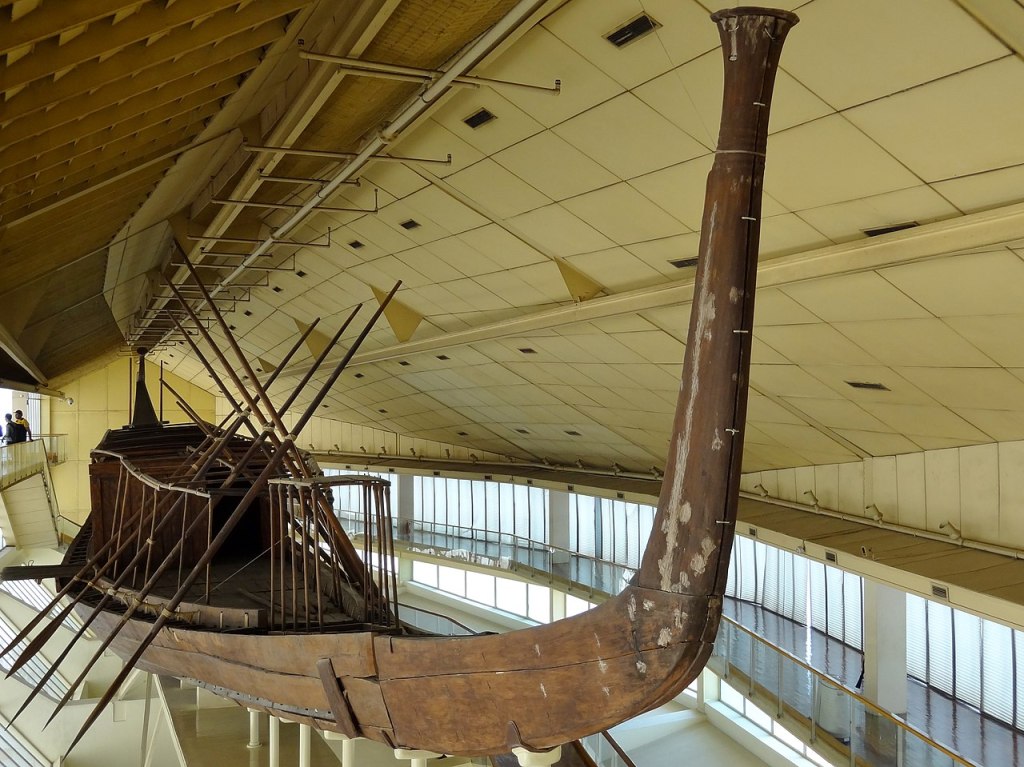
These two ancient ceremonial boats were massive constructions that Emperor Caligula had built to honor the goddess Diana during his brief reign of only four years (37-41 AD). They were sunk in Nemi Lake after his death.
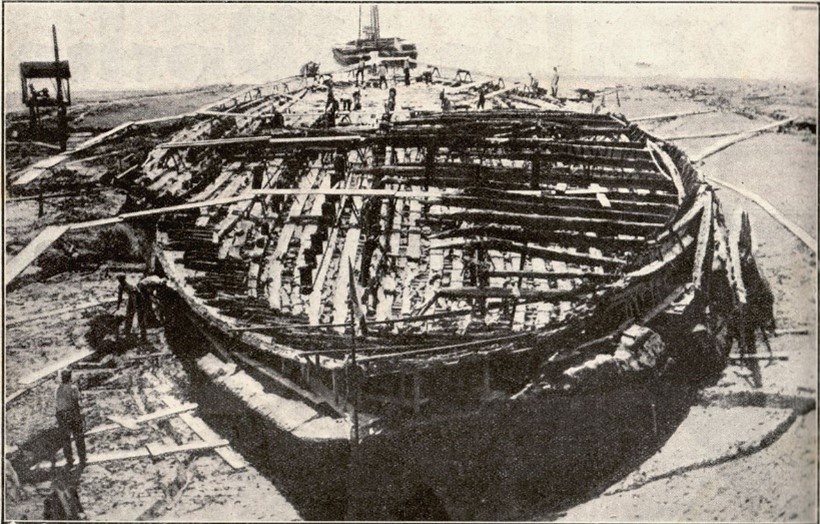
After it became known during the Enlightenment era that something was hidden in the round crater lake, located 27 km southeast of Rome, the wrecks were salvaged from the lake in 1929 and 1932 upon Mussolini’s request. Since then, people have been wondering why two such large ships were in a small lake, what their purpose was, why they were sunk, and who destroyed them during World War II.
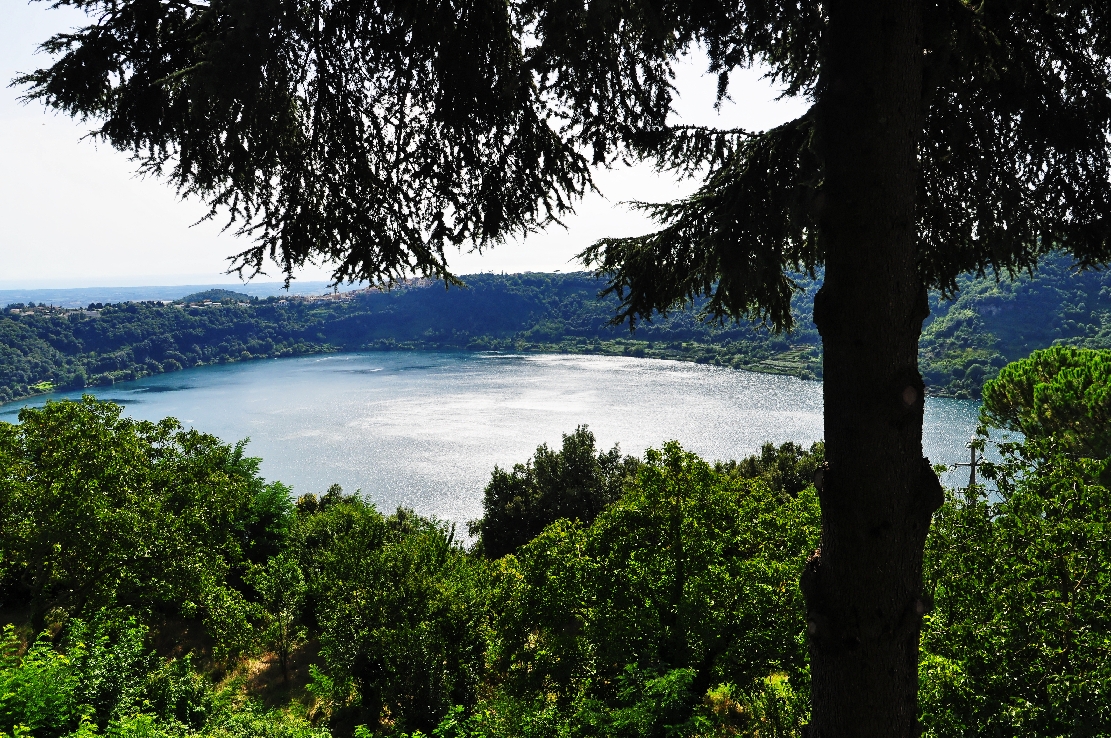
Lake Nemi
Lake Nemi, which appears today to be an abandoned pond lined with garden huts, was of central importance in ancient times. The lake, surrounded by high cliffs, housed the largest sanctuary of the goddess Diana in the Roman Empire. The remains of the gigantic temple, located on the slope of Lake Nemi, still lie buried under weeds and undergrowth. They have long since been looted and are only accessible to those who know where the temple once stood. Other important sites, such as one of Rome’s first legal Christian churches and a nymphaeum, can also be found next to its stones, all of which are overgrown and abandoned. The sacred grove of Diana now houses a horse farm – an irony of history, given that horses, the animals of Poseidon, were forbidden in the grove of Diana in ancient times.
The importance of Diana herself is also underestimated in our times. While Diana is known today as the goddess of the hunt, she was much more to the Romans. She was the goddess of the moon and thus also of femininity and birth. The monthly cycle was associated with the moon, but also with death. Women were traditionally the mediators between the world of the living and the dead, and Diana was associated with the three-headed goddess of the dead, Hekate. Diana was also the leader of the dead souls and a mystical goddess of the three ways. In Nemi, this underworld-connected character of Diana was more present than elsewhere, since the image of the goddess had been brought to Nemi from a temple in the Crimea by the legendary Orestes, and human sacrifices were said to have been made to her there. In Nemi, too, the lord of the temple was therefore traditionally murdered by his successor in a duel – an exception in the Roman Empire, which otherwise knew almost no human sacrifices.
The Nemi ships as evidence of the will to leave Rome for Egypt
To this day, the question remains as to why Caligula placed the huge ships in Lake Nemi and why such valuable boats were sunk.
So far, hardly any answer has been given in the literature as to the ‘why’ of the boats, yet on closer inspection, the answer seems obvious. In later antiquity, the goddess Diana was equated with the Egyptian goddess Isis. Archaeologists have found numerous temples to Isis in the area around Rome and Naples, and Caligula not only worshipped Diana but especially her Egyptian personification at Lake Nemi. Isis was popular in his day. In Pompeii, too, numerous frescoes depicting Isis have been found, along with a temple of the goddess and representations of the most beautiful of her landscapes: the Nile Delta near Canopus/Alexandria, an area that today is only accessible to underwater archaeologists as it is submerged.
Caligula, who suffered from psychological problems due to his terrible childhood and was probably also epileptic, worshiped the goddess of the moon and Isis. However, he was even more envious of the Egyptians for Canopus. He was born to the murdered general Germanicus and the later exiled and starved Agrippina the Elder. Caligula was named Gaius Julius Caesar and was the great-grandson of Emperor Augustus through his mother and the great-grandson of Augustus’ wife Livia through his father, thus a descendant of Caesar. He admired Cleopatra and Egypt and had little love for Rome after the terrible events of his childhood. He was in constant conflict with the Senate, feeling persecuted after a supposed or real poison attack. In the year 40, he finally announced that he would move the capital of the empire to Alexandria in Egypt, where he hoped to be worshiped as a living god.
For many, the prospect of Rome losing its emperor, and with him its political power, was the last straw that broke the camel’s back of the evil deeds, incest, and murders committed by Caligula, who was deemed insane. In the case of the transfer of the capital, both the Senate and the Praetorian Guard would have been powerless to further stop Caligula’s oppression and debauchery. Against this background, Caligula’s assassin Chaerea convinced his co-conspirators to put their plan into action. After only four years of rule, the youthful Emperor Caligula was assassinated in a theatre corridor in Rome, just like his ancestor Caesar. This also put an end to the plan to move Rome to Egypt.
One thing is important in this story for understanding the boats: Canopus is located near Alexandria. Its most outstanding feature is its Nile barques. The annual celebration of the resurrection of Osiris by Isis was one of the great religious ceremonies of ancient Egypt, culminating in a water procession along the canals between Thonis-Herakleion and the city of Canopus. Some of these barques were discovered and researched in modern times by Franck Goddio and his team. Their images can also be seen on frescoes and mosaics in ancient Rome.
It can, therefore, be assumed that the Nemi ships were an imitation of these Nile barques. Caligula imitated the much-admired Canopus at Lake Nemi, where he had a villa, and prepared his move to Alexandria.
Who destroyed the Nemi ships?
The question remains: What happened to the two famous wrecks of the mad Emperor?
In 1944, the two ships, salvaged with great effort, were destroyed by fire, and the subject of who is to blame remains a topic of various allegations.
The fact is that during the battles for Anzio and Nettuno in WWII, the area around Nemi and the surrounding villages came under heavy fire. The nearby Castel Gandolfo, actually immune as the Pope’s palace, was bombed by the Allies, and several hundred civilian refugees died. In Genzano on Lake Nemi, escape rooms collapsed, and a large part of the population was buried alive. In the night of May 31st to June 1st, 1944, there was another firefight. This time, in order to spare the surrounding villages, the German defence had set up on the uninhabited shore of the lake. As a precaution, the staff of the Nemi Museum was evacuated and housed in caves on the crater slope below the village of Nemi for safety.
Heavy bombardment and firefights ensued, but at the end of the fighting, although the surrounding localities and the German position had suffered, the museum was still largely untouched. Hours after the battle, however, the museum staff saw fire in the windows of the building from a distance. In view of the darkness and the prevailing fear, no one approached the museum, although flames raged inside. The next morning, the disaster became apparent: the ships had been completely destroyed by the fire. Only a few individual parts were saved, which had previously been removed to the Museo Palazzo Massimo Romano in Rome.
Immediately after the end of the war, a commission of inquiry accused the soldiers of the German Wehrmacht of deliberate arson. The commission’s report can be viewed on the website of the Nemi Museum. A small fallen column is cited – without explanation – as proof of the Germans’ guilt. However, it also mentions that there are holes in the roof of the museum that suggest a shell impact. The apportionment of blame does not appear to be based on any evidence, even after reading it several times. In addition, time-delayed incendiary bombs were commonly used by the Allies at the time, and their presence would explain the delayed ignition of the boats by two hours much better than clandestine arson without motive.
However, since the American army used the museum to house its soldiers a short time later and had cleaned it, the commission could no longer find any bomb remains.
In the summer of 2020, it became known that the mayor of Nemi, Alberto Bertucci, wanted to claim damages from the German government on behalf of the city council for the destruction of the ships. He intended to use the money to have the ships reconstructed and then exhibited in the local museum. In support of his claim, Bertucci claimed that he had in his hands “reports, extensive documents, and testimonies” that the heavy flak division 163 of the German Wehrmacht had been responsible for the destruction of the ships. To press his case, he called in the Florence-based German lawyer Joachim Lau, who had previously represented descendants of SS victims in Italy in compensation proceedings. Bertucci’s initiative secured him the attention of numerous Italian and German media, but he has still not produced his alleged evidence, and it can be doubted that he ever will.
It can be presumed that such reports and extensive evidence do not exist. It is hardly explicable why German soldiers would go to Mussolini’s favorite boats in the middle of the night, a few hours after a heavy bombardment of their position, to set the wrecks on fire. On the other hand, it is known that American bombers paid little attention to cultural sites in the region, as evidenced by the destruction of parts of Pompei and the Montecassino monastery. Therefore, it is much more likely that the Nemi ships fell victim to an unintended stray American incendiary bomb.
The realization that cultural sites should be better protected in wartime did not come to fruition until the Hague Convention of 1954, which was too late for Caligula’s ships.
Read more in my book ‘Murder in the cove of the goddess‘.
U.C. Ringuer
 Archaeology Mysteries
Leave a comment